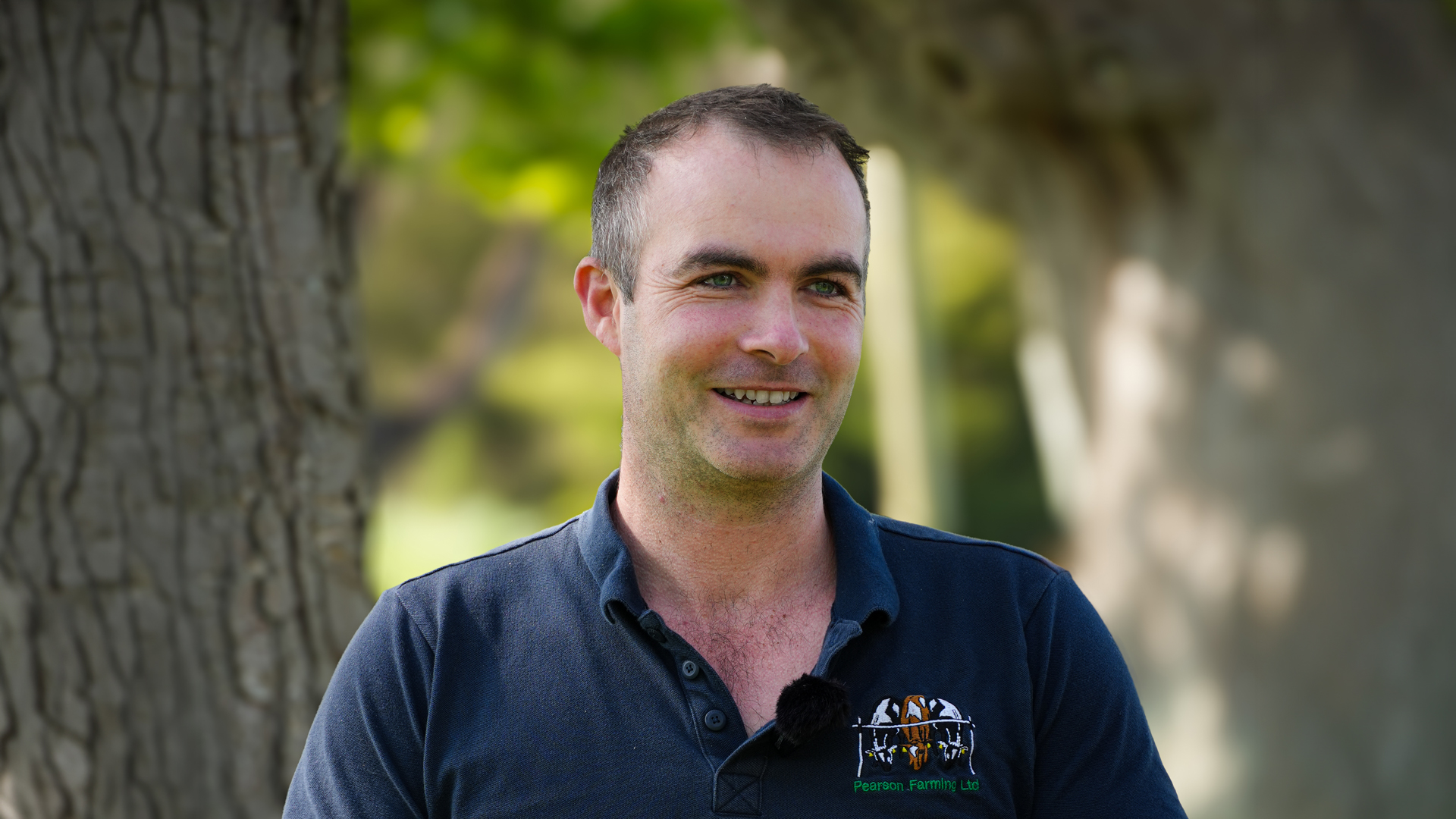
For Sam Pearson, finding a reliable way to hand pasture measurement over to the wider team has been a challenge for years.
In North Wales, Sam Pearson of Pearson Farming manages 500 predominantly spring-calving cows across two grazing units, supplying Arla through a grass-based system where pasture management plays a big role in day-to-day decision making.
Over the years, Sam has tried a range of different technologies to make pasture measurement easier to manage across the business. “We tried satellites, we bought a gadget to go on the front of the quad bike, but we basically kept returning to plate metering and doing it that way,” he says.
The challenge wasn’t whether pasture measurement was valuable – it was finding a way to confidently hand the job over to other people. “I’ve tried delegating this job to lots of different people and haven’t really got on well with it.”
Building confidence across the team
But since trialling AIMER , Sam says that’s started to change. “That’s something I really needed to happen to free up my time,” he explains. “So far, it’s going really well.”
It’s still early days, but the team has gradually started taking on more of the pasture measurement responsibilities as confidence with the system grows.
What’s impressed Sam most so far is how quickly he can pull a grazing wedge together using AIMER’s pasture estimates. “The bit I really like is the estimate,” he says. “You go to the paddock, it looks about what your eyeball says it should be, and when you scan it, it’s coming back the same.”
That confidence in the figures has made the whole process much quicker. “On one morning I was able to measure the 140ha grazing platform at Kinmel Dairy, in about 30 minutes,” says Sam.
The other farm, Hendre is more fragmented, with more than 50 paddocks to measure, and Sam says the speed difference has been noticeable there too.
Handling different field types
One area that has particularly stood out has been how AIMER handles the variation between different paddocks across the farm. “The home farm has everything,” says Sam. “There are some very thin, steep fields and then some really deep clay.”
Historically, some of the slower-growing paddocks would regularly lag behind during the grazing rotation. Sam says AIMER’s estimates have done a good job of picking up those differences. “I’m seeing those slower-growing fields dropping back in the 14 day grazing wedge forecast which is reflecting what happening on farm.”
Key results from Kinmel Dairy
· Faster pasture measurement across two farms
· Greater confidence handing pasture measurement over to staff
· 140ha platform (27 paddocks) measured in approximately 30 minutes
· Improved visibility of variable growth rates across different fields